Showing posts with label Nichi Bei Times. Show all posts

Sunday, December 6, 2009

Japanese-American press struggles to survive


Leaders from the two failed newspapers in San Francisco's Japantown held a community forum Sunday afternoon to discuss the future of the Japanese American press. 


Former employees of the recently closed Hokubei Mainichi were there and discussed the demise of the Hokubei, but most of the forum focused on the Nichi Bei Foundation


The newly formed nonprofit foundation publishes the Nichi Bei Weekly and was formed by former employees at the Nichi Bei Times, which folded in September. 


Kenji Taguma, editor-in-chief of the Nichi Bei Weekly, explained that the Nichi Bei Foundation is one of the first models of a paper changing from a profit enterprise to a nonprofit. Taguma, along with the rest of the staff of the Weekly are volunteering their time for the paper, which has a circulation of over 2,000 subscribers. 


The foundation has made attempts at innovation, primarily new special issues, since the transition to a nonprofit. The staff publishes a special green issue that has to do with the environment and global warming. They also publish a special multi-racial issue, a health and wellness edition and an anime and manga issue. 


But the foundation is still seeking donations and subscriptions so that they can continue to publish. 


Former Hokubei senior editor J.K. Yamamoto continues to volunteer his time to update the Hokubei Website, although he admitted "I should probably be looking for a job." He explained that if the Hokubei board can find funding the Website will continue to exist, but he ceded that the online edition does not help older Japanese-Americans who don't use the internet. 


Former editors for both the Hokubei and the Nichi Bei Times cited the lack of ad revenue and subscriptions as the primary reasons for the publication's failures. Executive Director of the Japanese Cultural and Community Center of Northern California Paul Osaki has noticed the effect the papers closing.


"When I run into people in the Bay Area, they have to ask what's going on because they're not receiving that information," Osaki said. He hoped that the community could come together and help the Nichi Bei Foundation get on its feet. 


"Civilizations existed and vanished," Osaki said. "Fifty years from now a student will try to trace the Japanese-American community and there will be no documentation. This is how we stay connected as a community and we're losing that right now."

Sunday, November 8, 2009

Japantown residents saddened by closing of Hokubei Mainichi

The last bilingual Japanese-English newspaper in San Francisco ceased its print publication last week and will likely end its internet edition in the near future leaving Japantown residents disappointed.

In an Oct. 27 letter to readers, Hokubei Mainichi President and CEO Don Yamate explained that the newspaper would halt publication "as a result of our worsening financial situation." He also apologized for the last minute notice, writing that the staff at the Hokubei "sincerely regret having to give the bad news so suddenly." 

Hokubei Mainichi ran its last issue October 30, and its final publication comes only 50 days after its former competitor, the Nichi Bei Times, closed (an offshoot of the Times, the nonprofit Nichi Bei Foundation, now prints a weekly English edition and thrice-weekly Japanese issue). The loss of both publications made the news that much harder for Japantown residents and leaves some scrambling for a new source of news.

"It's very inconvenient," Keiko Sajan said as she sat with three friends drinking tea and coffee in the Japan Center. "I used to read it every day." Sajan, the only one of the group of four who spoke English, said she will now get her news from television.

"Tragic," executive director of the Japantown Task Force Robert Hamaguchi said as he held up the Hokubei final edition. "It's just unfortunate they couldn't have come together with the Nichi Bei Times." 

Hokubei CEO Don Yamate did offer a glimmer of hope, saying "the company will continue to seek investors and make every effort to once again become a media outlet serving the community," but the prospects appear dim. 


Staff members are still gathering and posting Japanese-American related news on the Hokubei Web site, although they are not being paid and are "preparing to go dark" Hokubei columnist Delia Tomino Nakamaya said. In her opinion, the internet version would last until the beginning of 2010 at the latest due to the difficulty in raising funds. 

Nakamaya tried to rally readers in her final article and appealed for assistance in the form of financial support or advertising in the hope that the Hokubei may print again. 

"A newspaper is the voice of a community," she wrote. "When developers aspire to land-grab or a school in Japantown is in need of support or funding, Hokubei Mainichi has been there to let us all know what is going on and what actions we can manifest. Without a newspaper, a community is silenced. As Japanese Americans, we know very the well the terror of silence, the resounding silence of America as we were interned duing World War II when no one spoke out against our four-year imprisonment."

Nakamaya is now exploring other options as the Hokubei has struggled to raise the $500 needed to keep the online version going without employees being paid. 

From 1977 to 2007, Hokubei Mainichi was housed in the large building on the corner of Post and Webster streets, but with diminishing revenue the newspaper company sold the building to Viz Media in 2007 and moved to 1710 Octavia St. The Post Street building is now occupied by New People, which houses a Japanese themed art gallery, movie theater, and small boutiques.

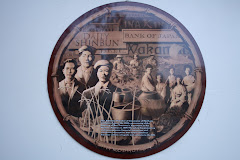
For now, all that remain of Hokubei Mainichi is dwindling online news and a small plaque in the front window of New People, the end of which reads:

"Founded in 1948, the bilingual newspaper voiced the post-World War II concerns of both older Japanese immigrants and Japanese Americans, chronicling news and issues critical to the community that were not covered by the mainstream press. Both as social center and home to the Hokubei Mainichi, 1746 Post Street served to unite the community."